Monday, October 30, 2006

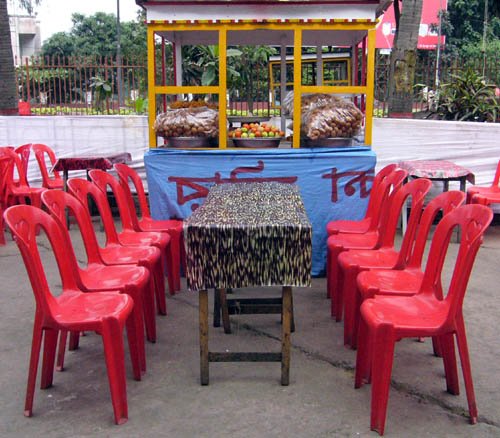
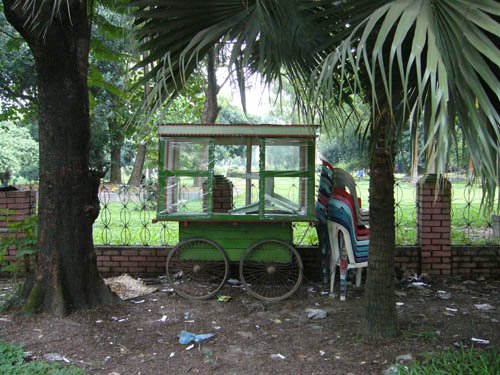
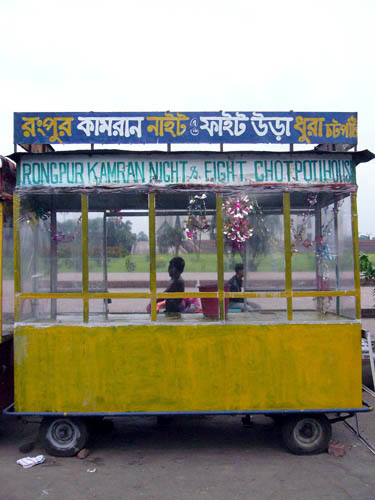
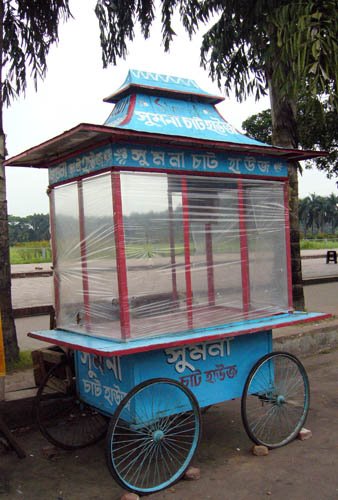
Chotpoti/Foochka Stands (Photos)

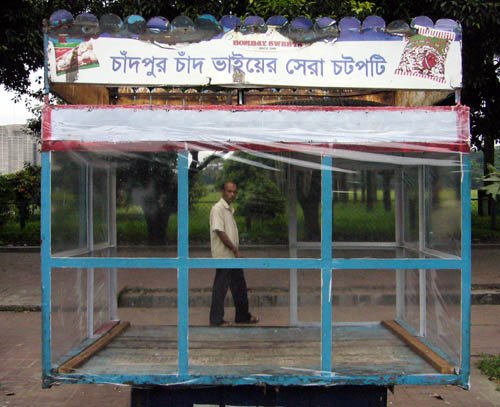
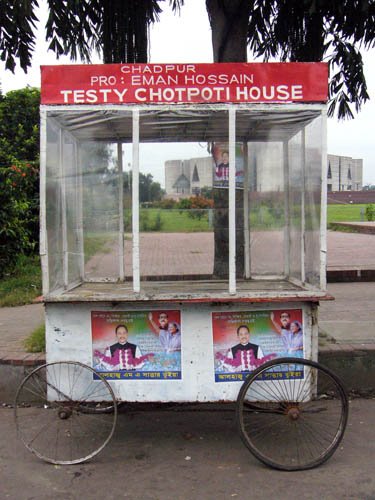
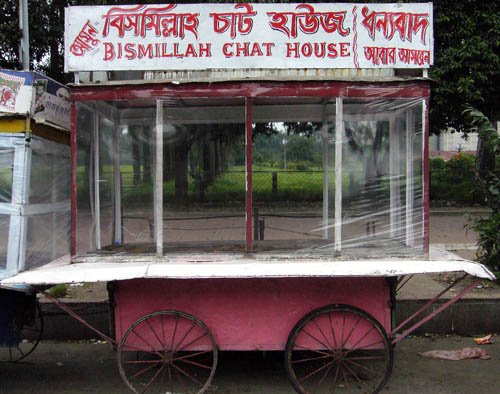
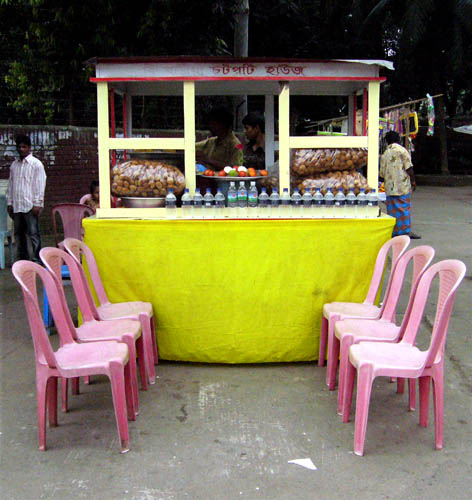
Some pictures of Chotpoti and Foochka stands:


Thursday, October 26, 2006

NRBs Deciding to Return to Bangladesh

Many NRBs (non-resident Bangladeshis) dream of returning to live in Bangladesh: it's a basic human instinct. For some, the dream keeps getting postponed. Reasons come up: financial security, kids' education, occupation upon return, spousal support or lack thereof etc etc. Others decide and take the plunge.

While living in the US, my wife and I also wanted to return to Bangladesh, mostly for parental reasons. But our wishes did not synchronise often. We both loved the US (and still do) and were chasing our goals one way or another. The first time both of us simultaneously wanted to return, in 2005, we did it. Lock stock and barrel.

That's right. We really believe that it is such a big jump (specially if you have lived abroad for long) that the only way to make the change is to be totally committed to it. For us at least, "let's give it a try for 6 months" approach was not going to work.

Events proved we were right in our thinking. Three weeks after returning here, 500+ bombs went off (Aug 17, 2005) all over Bangladesh. Do you think if we had been in "trying out" mode we would have stayed here after that? But we stuck it out, because our firm decision gave us the courage to face the uncertainty.

One immense help in deciding was the general encouragement and prayers of our friends in Silicon Valley (as well as our elder relatives everywhere.) I recall that through the nerve-wracking process of decision-making - and the consequences of that decision such as putting up our house for sale - the encouragement of elders and well-wishing friends were like a calm, steadying force.

It was therefore with disappointment that I heard a story this morning of another NRB family who had decided to return home. When they announced the decision to their (NRB) friends, the reaction was more like "Have you gone mad?" No, this talented, brave, energetic and skillful family has not gone mad. They have made a sane but big decision about where to spend their time and effort on this planet, and need all the support they can get from his friends.

After all, isn't Time really all we have in this world? So isn't it important how and where we decide to spend it?

Bangladesh needs NRBs back here - specially those with skills that are in short supply. Businesses, universities and organizations here need talent in so many areas: management, IT, teaching, banking, pharmaceuticals, healthcare, etc etc.

Many organizations in Bangladesh hire non-Bangladeshis because Bangladeshis are simply not available. I heard - unconfirmed - there are 100,000 expat Indians working in Dhaka firms and organizations, not to mention other Asian and European expats. Don't get me wrong - I do not begrudge them one bit. On the contrary, I believe they contribute a lot to this country and economy, train our people, and help us become more cosmopolitan. However, the numbers show the need for skilled talent in this country.

Lest you think I am painting a rosy picture, let me also say that if you do make the jump, only you can decide your and your family's future and well-being here. This means looking for a job or starting a business or deciding in some other way how to a) support your family and b) put your talent to good use.

Of course, you would have to fight the usual battles: kids education, commute, healthcare, security, food-bhejal, etc etc. But others living here also fight those battles every day, don't they?

And if all goes well, and Bangladesh grows like she is predicted to, then your lot will also improve with that.

It takes courage to make the decision. If someone you know decides, please give them your support and pray for them. If you decide, I wish you all the best and hope your dreams come true beyond your wildest expectations.

Monday, October 23, 2006

Kids Waiting for Eid (Photos)

A large percentage of Dhaka's population has left for their home towns/villages to celebrate Eid, the end of Ramzan. The bus terminals, railway stations and launch ghats were jam packed for the last few days.

But while families wait to board their transportation, how do their kids pass their time? I found out at Mohakhali Bus Terminal today.

Holding on to Daddy's hand is a real good way to wait...


...but live entertainment from Mommy rates high, too...


... as does a sip of RC Cola from her own hands.


Then again, some have neither option. "Anybody seen my family?"


Little ones while away the time sleeping on Mommy's lap...


Those lucky to have siblings keep each other busy...


... but if not, you can always count your bangles...


"Hey you, that's my hat and I want it back!"


"See, it fits me real good."


"Y'all can check out my new red watch right here"


"Is this the stuffed animal Daddy promised for Eid. Hmmm. Maybe not."


Some perhaps wish they could fly to their village like a bird...


... while this boy keeps his Mom spellbound with a story...


... But shaking hands with a politician? Surely things are not that bad?


"Whew, finally boarded the bus! Say-y-y-y, what are you looking at Mr. Photographer? Don't you have to get home for Eid?"


Hooray! We are on our way.

Wednesday, October 18, 2006

Bicycling Tips for Dhaka

I have finally gotten the hang of bicycling on Dhaka streets. Here are some guidelines I find useful.

Since Dhaka streets are prone to traffic jams, it is best to be flexible about destinations and times. Even better, try not to have a destination at all. Because if you have a firm destination in mind, then all other cars, busses, trucks, CNGs, rickshaws, motorcycles and pedestrians will simultaneously decide to go to the same place. Thus none of you will get there in the foreseeable future.

For bicycling purposes, street and footpath are interchangeable. In fact, footpath is preferable. Think about it. Unlike a nasty "Tata Mahindra" bus, no matter how hard a pedestrian runs into you, or you into them, they cannot crush your bones.

Also, using the footpath makes you adaptible. If your progress towards unknown destination stops due to a jam, you can keep moving by switching to a footpath.

Always wear a helmet. This will make sure you get the attention you deserve. Note however people are not staring in admiration of your impeccable safety standards. They are wondering how mad you are to be wearing this gizmo on your head on a hot day as sweat streams down the sides of your face.

Wear those zip-off-leg pants. Then open the front of the zip so your knee pops in and out in sync with pedaling. This provides much-needed air- conditioning your body. Also, those wondering about your sanity will stop wondering and avoid you.

Use a bell liberally. The soothing sound provides a musical counterpoint to the ongoing concerto for car and bus horns. The preferable spot to use the bell is on the footpath, when you are right behind a pedestrian. As a bonus, you will see their jumping and dancing skills.

For safety, use buffers when crossing or turning in insanely busy streets or roundabouts. Buffers are other pedestrians, bicycles and rickshaws which are crossing the street at the same place as you, but are closer to the approaching traffic. So if busses are coming from your left, your buffers should be crossing the street on your left. Thus, if a runaway bus cannot stop in time for your crossing, hopefully the collision with your buffer will stop it before it hits you.

Although it is sometimes tempting to go slow and savor the noise and fumes - I mean, peace and greenery - try to maintain a good pace. There is nothing more embarrassing than being left in the dust by a thin rickshaw-wallah carrying two overweight parents and a kid while you amble away on your fancy foreign made bicycle wearing that helmet.

Speaking of rickshaws, another great way to make friends with them is to follow one carrying many jute sacks full of rice. At an opportune moment - eg, when it is taking a turn and its balance is compromised - rear-end it firmly. Be sure you have a quick escape route before attempting this maneuver. Observe avalanche of the sacks from a safe distance.

If traffic heading in your opposite direction is completely stopped while you are breezing along, you can make many more friends my smiling and waving at the stuck people as you pass them. Loudly sing "Pichdhala ei pothTare Bhalobeshechhi" for extra effect. (Translation: Oh how I love this paved road!)

Us Banglas take our expectoration seriously. Try to anticipate when a person near you is going to spit, clear phlegm or throw pik (the red stuff resulting from chewing betel leaf) and which direction they will aim. Sometimes you will hear a throaty warning signal, but they can also strike silently. Avoid being in the same spot at the same time as flying expectorant.

Along the same lines, exercise caution when near a bus - specially a long distance one with open windows. Sooner or later someone will hurl through a window. Try not to get any on yourself. Double decker busses are even more dangerous. Aren't you glad you are wearing that helmet?

Never assume that just because you are on the left side of the road, other vehicles on the same side are headed in the same direction. Every 11th bicycle, 14th rickshaw and 7th motorcycle is headed wrong-way. No, they did not spend many years in America and think it is ok to drive on the right side. Actually I don't know why they do it - for shortcut purposes?

Be extra careful around traffic policemen with big sticks. They can become excited unexpectedly. Excited traffic police swing their sticks wildly. Try not to get your nose smashed in.

Delay your normal morning shower until after the bike ride. If you need a grey shirt, wear a white shirt during your ride and find an older bus spewing out black smoke. Follow this bus for a few minutes.

When you are getting tired of waiting to cross the road, never underestimate the power of stepping in forcefully in front of a moving vehicle. This is the only way to make them stop. Hopefully the buffer you have kept on your left will help. But if not, be brave. And if the vehicle doesn't stop - hey, you did leave your life insurance policy with your SO before leaving home, didn't you?

Monday, October 16, 2006

Day in the Farm (Photos)

Here are pictures from a day I spent in my Father's rubber farm, located 200km NE of Dhaka near Srimongol.

Mimosa (Lojjaboti) flowers were in full bloom.


I was walking on thick grass near the pond. Suddenly a I heard a rustle very close to me, and this dove (Ghoo-ghoo pakhi) flew out and landed on the other side of a creek flowing near the pond.


After a while he took off again and crash-landed in a paddy field. A farm worker went to inspect and picked it up so I could take a picture. The dove's legs and wings seemed alright, but he could fly only short distances. We set it free after the picture session.


Meanwhile, a giant yellow flower had bloomed near the bungalow. It attracted all manners of critters, including bees...


Ants sometimes worked alone...


...and sometimes in groups...


"Stay away, Mr. Bee, you don't have landing rights on this runway - urm, stamen!"


"But try that one - over there."


A wasp (bolta) hovered near the flowers, zigging and zagging...


Whoops, that was a rough landing!


A hairy spider appeared in the plant's leaves.


Butterflies hung around in odd positions...


...while a nervous dragonfly considered whether to join the fray.


There were many other wildflowers in the farm, including this kind


and these:


All in all, a rewarding day at the farm! Isn't the Bd countryside beautiful?

A Success Story - Repeatable Here?

My friend Wazi from the Bay Area alerted me to this story: Jawed Karim, one of the three founders of YouTube, is the son of a Bangladeshi father and German mother. More here.

I met the father-and-son team at Wazi's house in 2000, when Jawed came to the Valley for summer work (which ended up with his PayPal stint.)

Too bad the NYT article does not mention the Bd connection.

Couldn't kids based in Bangladesh have dreamt up and implemented YouTube? I believe this kind of innovation is absolutely possible here, but we must create the right environment. We must inspire the kids in the right way and give them the right tools and resources.

If we make a breakthrough like this once, the IT dam will break.

Sunday, October 15, 2006

Dr. Yunus's Nobel

A landmark event, one about which we will ask down the road, "Do you remember what you were doing when the news came?", or say, "I was talking with so-and-so in the drawing room when my friend ... called with the news."

Something so momentous that we remember the time, place, smells, colors, everything else about when we hear the news.

Unfortunately most news like that tend to be sad news.

But in this case I concur with my friend who said "The one pure happy news after 35 years." (Bangladesh was born in 1971.)

Congratulations, Dr. Yunus. And thank you very much. I hope you inspire many more.

Wednesday, October 11, 2006

Consumption and Waste

When I entered Cornell as a freshman in 1977, one of my roommates was Mike S., grandson of a Nobel laureate and a brilliant fellow. Mike breezed through his homework-sets and had time left over to help me with two things killing me: helping debug my first programming assignments (in PL/C, on punch-cards, for an IBM 360), and typing my handwritten papers. This was a great relief to me.

For my part I lectured Mike on things and in general showed him the folly of his American ways. Thus it was that America and I started adjusting to each other.

I had already spent two years in London and so was not in total culture-shock. Nevertheless, my old Bangladeshi habits died hard. One of these was "do not waste."

So I got on Mike's case every time he left the room with lights on. He was polite enough to agree in principle, but I could not make him change his habit in practice. He would forget and then make some wishy-washy excuse.

Finally one day he confronted me: "But Ihtisham, if I turn off the lights how can it possibly help your power situation in Bangladesh?"

This was a moment of profound shock and revelation for me. Not only had this smart, kind individual not understood why we needed to reduce waste, further, he had somehow confused my innate desire to reduce waste in every way - for the good of the planet and its future generations - with a desire for diverting the saved energy to Bangladesh!

It was only much later I learned that at many American dinner tables, when children refused to finish their food, their parents reprimanded them by invoking "all those starving children in India." Perhaps that's where Mike's extrapolations originated.

When I explained the real reasons to him, Mike was only half-convinced. Even after the shock of the Oil Embargo, America had access to virtually unlimited energy and other resources. So why bother turning out the lights?

Variations of this scenario played out repeatedly during my earlier days in the US. Why are you throwing away that perfectly fine shirt? Those shoes you threw away are intact - so what they are not fashionable? Is it really necessary to upgrade the car every other year? The amount of food that I saw wasted at Cornell Dining (an all you can eat joint) staggered me.

What was it about my background that had made me so sensitive to waste? Mainly because Bangladesh has so many people squeezed into such a small, resource-poor area, that every useful thing has to be used to the max. You were not Bangladeshi if this you were not embedded with this value.

Ok, ok, so Bangladeshis sometime take "do not waste" to an extreme. While every conceivable item gets recycled, the purpose is not always noble. Eg, Jinjira, a place near Dhaka, acquired its notoriety through making counterfeits some of which utilized recycled packaging of the original products. (In recent years, of course, counterfeiters in China and Thailand have left Jinjira in the dust, and thank goodness for that.)

In an ironic twist, I was simultaneously being seduced by America's affluence. For example, I recall being overjoyed that Cornell Dining's supply of chocolate milk never ran out. I could drink as much as I wanted! Having arrived in America with two suitcases (one with books and records; the other with clothes) pretty soon I needed a dozen boxes for my possessions.

Today, I find that back in Bangladesh, I am less likely to turn out the lights when I leave the room, and once in a while I do not clean out my plate completely.

As for children who grew up in American abundance, they must feel like my roommate Mike when they see "do not waste" in action in Bangladesh. However I am proud to say that our initially reluctant children have become conscientious about turning out lights and cleaning their plates.

Bangladesh appears to have changed too, specially in the upper and upper-middle classes, where affluence has brought plenty of consumption accompanied by the inevitable waste.

For example, in all-you-can-eat buffets in Dhaka restaurants you will see many unfinished plates of food.

Even in villages, where a torn sandal used to be repaired and re-repaired until it was in shreds, today a villager is more likely to replace it promptly if it rips.

Over the same years the US has also changed. Waste has not gone away completely, of course, but every locality has a recycling program. Things have come a long way since the 70s.

But the US still remains the biggest "consumer/waster" on the planet. A recent article in The Independent newspaper stated that if all people consumed resources at the American rate, we humans would need five planet Earths to support our lifestyles.

I wonder how many Earths would be needed if all humans consumed/wasted at the Bangladeshi rate? 0.5? 0.25? 0.1?
Monday, October 09, 2006

Silk and Science Laboratory

Yesterday I visited Dhaka's Science Laboratory and, while waiting for a meeting, had a fascinating discussion with a young scientist about silk production.

Silk is produced in Rajshahi. Why Rajshahi? Because that's where most of the mulberry (toot in Bangla) trees are. And mulberry leaves are the food of silkworms.

The young silkworms are fed these mulberry leaves, which they apparently eat day and night. Then they build a cocoon around themselves using their saliva (entering the pupa stage.) As they spin the saliva round and round it hardens to become silk thread. An adhesive is also created from the saliva at the same time - this adhesive sticks the threads together.

If silkworm's lifecycle is allowed to proceed naturally, then they grow into moths inside this cocoon, breaking the cocoon and flying out. Unfortunately breaking the cocoon creates tears in the thread.

So instead, when the cocoon reaches the optimum size, it is boiled. This kills the worm inside. It also removes the adhesives that hold the silk threads together.

Now the unbroken thread of the cocoon is pulled, unravelling the cocoon. Incredibly, the thread from one cocoon can be up to 250-300m long. (That must have been one dizzy worm, spinning around so many times to create its cocoon!) This silk thread is woven together to make Rajshahi silk.

Not all cocoons are boiled. A fraction are saved and used for breeding purposes for the next generation. The scientist guessed the length of the life cycle to be 2-3 months.

While we were waiting we also discussed the environment. I mentioned to him my concern about the possible compromise of the food chain with chemical impurities with our rapid industrialization. He said yes, that was inevitable, and the most likely and damaging culprits were heavy metals. Eg, lead in paints and dyes, tungsten, etc. Arrgh. This lab was working on creating new natural dyes. But they had doubts about economic viability.

Science Laboratory has many divisions working on research, testing, prototype building, better processes, certification, and other types of work. The scientists I met there were knowledgeable and proactive. Do we as a nation make optimum use of it?

Thanks to my friend Rahim for making this trip possible.

Monday, October 02, 2006

The Hour Before Iftar (Photos)

An hour before Iftar yesterday, I went to local bazaars and was relieved to discover that I am not the only one obsessed by food during Ramzan.

This seller dressed his chhola beautifully...


... but picky buyers also abound - checking out an orange.


Jilapis fried away in historical oil...


...while Muri (puffed rice) serves the health-conscious


Pre-iftar is slow for the barbershop business.


But hey, shopkeepers gotta eat Iftar too, so why not roll your own?


This pair of apple sure looks heavier than the 150g weight.


...Dates is all I want, I want them plump chewy sweet dates...


Hey, what's inside those fried thingies?


Having trouble keeping fingers away from the food? Wait it's not time yet!


This Gulshan shop is more upscale and restrained


Is this young man having trouble concentrating?


And let's not forget that kids enjoy Iftar too.

Friday, September 29, 2006

30 Years

Here is a photograph taken in 1975, the first national-level Basketball team in Bangladesh. Yours truly (in the circle) the youngest of the lot. (I was just past SSC, everyone else in university.) Big guy in the front is Coach who came to train us from the Soviet Union (those were Basketball heydays for USSR - they had beaten the US in 1972 Munich Olympics.) Anyone recognize who is third from right in middle row? (A second "schoolkid" in the team, Dastagir, was absent on Photo Day.)


Here is another photograph 30 years later, in 2005. The group of friends in Silicon Valley who I played with for a few years. This time yours truly (in circle) the second oldest of the lot. And feeling emotional because these guys had helped ease me back into the game after a 25 year break, but now it was time for me to leave.


When the USSR was breaking up in the 80s I found myself often thinking about Coach. He was a decent and proud Russian. Surely it must have been hard for him to watch his country disintegrate and lose its place as Superpower.

Second Ramzan

This is our second Ramzan in Bangladesh. The fruitsellers and Iftar sellers and just about everybody else (except the bottled-water-suppliers to the offices) are doing brisk business. Everyone has gone on a slightly laid back pace. But the first few days are hard for many fasters, so sometimes tempers run high. The second day of Ramzan I was walking in the streets near Banani around noon, and noticed that people were a little less patient, and more prone to starting arguments or just being rude to each other. Or maybe it was my hunger playing with me!

I enjoy the Jamburas, Pomegranates and Aamra at Iftar, as well as Halim/Chhola/Peyaju of course. There are many elaborate Iftar items floating around. Fancy restaurants in Gulshan set up table-top iftar items that can be brought home at Iftar time. Perhaps I should check out old Dhaka at Iftar one day to see what they offer.

But I do miss those plump Medjool dates we got in the US. The dates here, which are imported, are not too good. Sort of a bland vanilla variety.

Long Live Siddiqua Kabir

Siddiqua Kabir's (no relation) "Ranna Khadyo Pushti" is a famous Bangladeshi cookbook. When we were living in the US, it provided us recipes for many standard Bangla dishes.

Funny - after we returned to Bangladesh, the book has enabled us to recreate many "foreign" dishes. This is a great help, particularly for our kids, who grew up with Western food.

For example. our children like pancakes for breakfast. Back in the US I used to make them buttermilk pancakes from a mix. But how to find the mix here in Bangladesh? No problem! Mrs. Kabir's book has a recipe for pancake using locally available ingredients. All you need are flour, egg, baking powder, salt, sugar, milk and oil. In 30 minutes or less you will have pancakes that taste as good or better than the ones in the States.

Her Chinese recipes have also turned out to be accessible and tasty.

So... if you are contemplating returning home from the West, and are worried about what your kids will eat, worry no more because Mrs. Kabir's book covers a lot of territory.

Saturday, September 23, 2006

Fishermen

Estimates of fishermen lost in the Bay of Bengal in this week's sudden depression (was it really that sudden? Weather was also crappy the week before...) have ranged anywhere from several hundred to three or even four thousand.

Hundreds of fishing trawlers are lost.

These guys bring in the fish that feeds many people in Bangladesh.

How big are these trawlers? Do they have communication gear? Did anyone ever get any warning? Were they too far out to make it back on time?

A very sad story, indeed. Ok, so you can't fight weather, but can't more be done in the future to minimize risks to these brave souls? We see the Atlantic hurricanes being tracked for days and days. Are the BoB ones more sudden?

Wednesday, September 13, 2006

Books Here, Books There

After many attempts I finally started reorganizing my disorganized books today. While doing so I reflected on how my book habits have changed in the year I moved back to Dhaka.

The single most important change is this: back in the US, I relied on libraries for a large chunk of my reading matter. In Dhaka I am on my own.

So, if I want to read a book I don't own, I must buy it. English-book selection in Dhaka - while better than before - it still modest. I monitor the stores carefully, pouncing on new and interesting titles when they show up - assuming they are priced right.

Yes, English books are expensive here. Dropping USD 8 on a book in the US was not a big deal, but out here, spending Tk 500-600 on a book somehow does not feel right. Luckily there are breaks to be had. I picked up Ian McEwan's Saturday for Tk 325 (from Omni) and Amitabh Ghosh's Hungry Tide for Tk 450 from Aziz Super Market.

Ah, yes, Aziz Super Market. This is the new book mall in Dhaka. It is truly wonderful. And if there are not enough English books, the shortage is made up by the Bangla books of all kinds.

Another issue is protecting books that I already own. They require vigilant maintenance. For example, while reorganizing my books today, I purged a good many of
cockroach eggs, and ended up lining the shelves with roach-killer poison. Then I worried about the books getting poison on them, the story of the King and his Doctor playing in my mind.

Any travel outside the country presents an opportunity to acquire more books of my choice. Careful lists are written and re-written, often to be superseded by the books that I see on beguiling displays at the actual bookstore. Sometimes my "list" books are no good - Don DeLillo's Underworld was disappointing - while a displayed book - such as 1599, A Year in the Life of William Shakespeare - turns out to be a treat.

Then there are books that I could have, should have bought while I was still in the US, but did not. But maybe that direction is best left unexplored.

More heartbreaking is when I look for a book I know I have but cannot find in my shelves. I lost it - or maybe even gave it away! - while in the US. Or perhaps they were lost in transit. A bundled edition of Updike's Rabbit novels, a 100-year retrospective essay collection on Paul Strand the photographer, along with Edward Said's Orientalism, are some that I search my shelves for in vain.

I have much to be grateful for, though. All my autographed books have survived, including those by Syed Mujtaba Ali and Ansel Adams. I had had the good sense to
pick up all of Garry Winogrand's exceedingly rare photo monographs. The Sweet Flypaper of Life, a book of words and photos by Langston Hughes and Roy de Carava is a book I love much and turn to often. It was a lucky day that I decided to splurge on that one.

Finally, the entire world of Bangla books is now open to me. It is a joy to discover new talents as well as the works of older, established writers (well some of them anyways :-) ) And I have already started collecting autographed copies: the first two were Syed Manzurul Islam and Muhammad Zafar Iqbal.

So I ask myself, isn't it nice to come home, and proceed to complete the reorganization.

[King and Doctor story: many many years ago, a King had a trusted doctor who took very good care of the King. The King liked the Doctor which made others in the Court jealous. So they conspired and convinced the King that the Doctor was a Bad Guy. The King decided to behead the Doctor. The Doctor said, please grant me one last request. I want you to read a book that I will leave for you, but read it after you kill me. After Doctor is beheaded King sits down to read the book, finds pages sticking to each other. So he moistens his index finger by licking it and uses it to separate the pages. The book is the Doctor's life story. At the end it mentions the unjust beheading, and says that the Doctor got his revenge by lacing pages with poison which the King has by now ingested. As the King reads this in horror, the poison starts to act and he dies.]

Wednesday, September 06, 2006

Taxi Driver

Sometimes I commute in a taxi or CNG and get into conversations with the drivers regarding their occupation. They rent the taxis from the owner on a daily basis and pay for all expenses of running the vehicle for the day.

Daily rental: CNG: Tk 600; small blue/black taxi: 800; yellow cab: 900-1050;
Gas (CNG) expenses: Tk 120-150
Daily take-home: Tk 200-500 (after paying daily rental, gas, food)
Biggest pain: 2-3 hour wait at CNG station to fill up
Biggest joy: a long "khep" - to Norsingdi, Bhulta, Tongi, Savar, etc (assuming they don't get caught by a cop for breaking the routing rules)
Busiest day: Friday, when a lot of people go "home" for weekend; others just go out
Slowest day: Saturday - no one wants to go anywhere
Rainy days: can't handle all the people who want a ride
Working hours: 7am to 10 or 11pm.
Working days: alternate days since they need rest after 16 hours of driving
Kms covered in average day: around 300

The masses prefer CNGs over the taxis because of ventilation and mobility/navigability. But on winter days taxis are more in demand, since the open sides of a CNG cannot protect the passengers from cold.

Why do so many drivers say "No" to passengers when their vehicle is empty? Most drivers claim it has to do with the destination. If the passenger wants to go to a location from where it is hard for the driver to find another fare, then they say No. (Hmm, next time I hear a No I might try offering twice the metered fare - that should work, right? The trouble is as soon as I hear that No I am so irritated that there is no way I want to talk to the guy or see his face again!)

Saturday, September 02, 2006

Homegrown People Mover

In some villages near the intersection of Turag and Balu rivers, I saw these people movers. I was told that engines meant for pumping water for irrigation were modified and used for this purpose. They run on smaller roads where there are no buses and rickshaws are too slow; and there are no CNGs because of lack of CNG stations. The drivetrain and cabin are locally designed and made. Fares run Tk 5-8 for a 2-3km trip. They run on diesel. On a good trip they can carry 10-12 people.

I could see that this piece of local ingenuity was very useful for the village people. Even on Friday, I ran into dozens of them which were running full house.