How do these 'chotpoti houses' rate in terms of hygienic standards these days? Back in the 'old' days, they were notorious for inducing immediate diarrhoea.
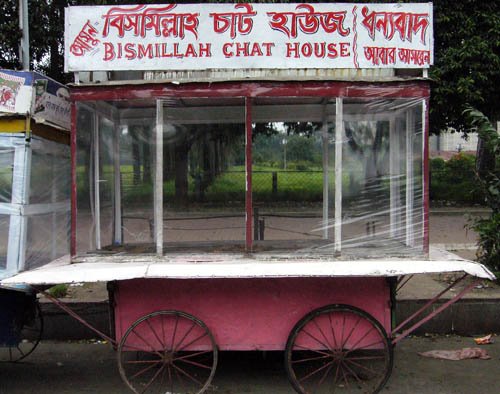
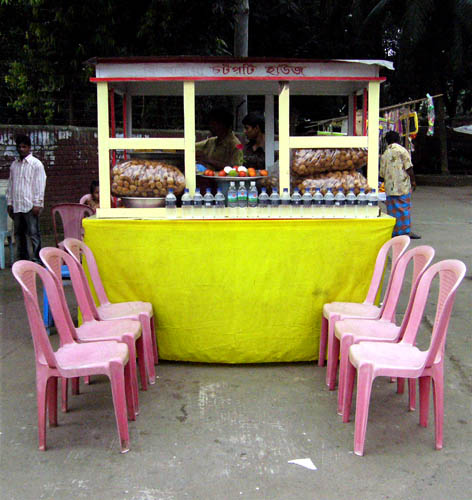
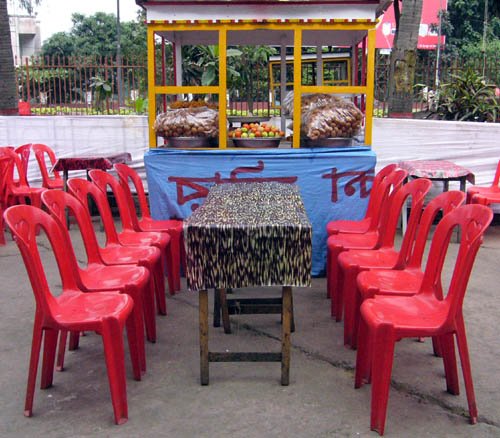
Nice subject, nice pics. Nifty, not so significant (maybe, maybe not) feature of the Dhaka I grew up in. Very nostalgic .... Even here, there has been some evolution, esp. the ads, and the plastic chairs.
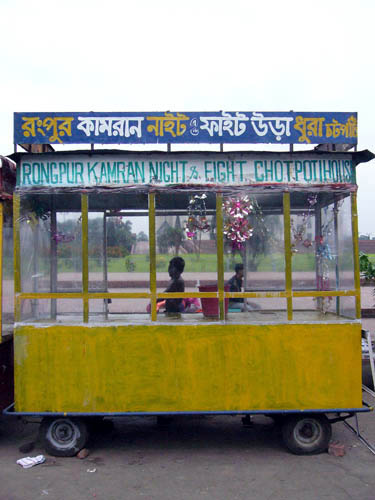
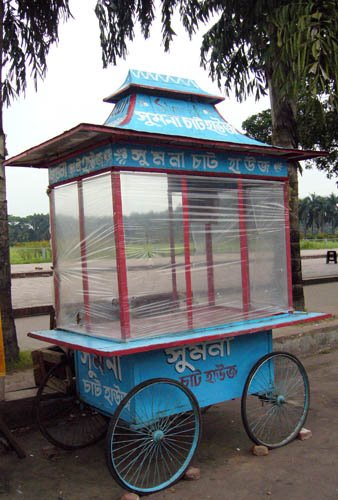
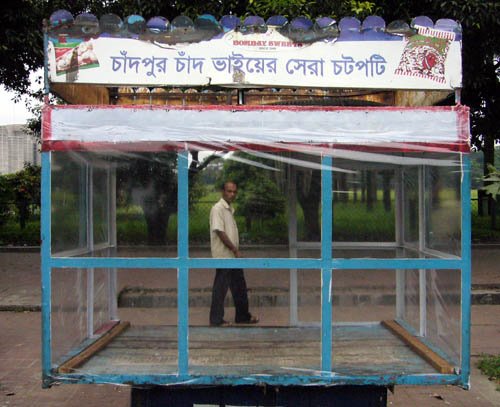
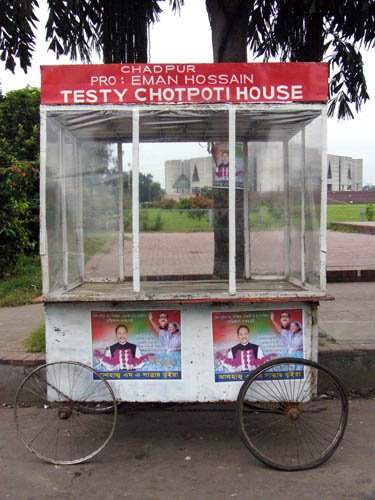
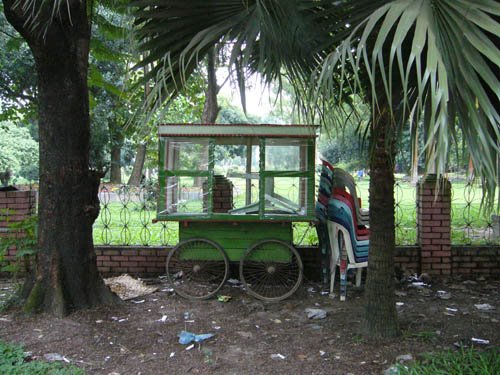
I was trying a more "formal" approach to photographing these, and took advantage of the Aborodh to get some people-less shots.
Hi Tshaheb,
Thanks for your kind words. Not sure about hygiene - have not tried it yet. But one of these days I will try it. Yes, I was amazed to see the sit-down chairs etc. Things do get better.
Nice pics. I am living in Dhaka since 1948. In the 40's I didn't see a single chatpati or futchka shop. Dhaka city commercial hub was limited to chawk bazar, Islampur-sadarghat and Nawabpur and it did not patronized by locals.
Chatpati, Futchka, Ghugni, Alur dom, Alukabli, Nokul-dana and kulfi were popular items in multicultural Calcutta (Kolkata). It was introduced in Dhaka by the immigrants from India in early 50's particularly those came from W. Bengal, Bihar and Bombay. Few chotpati stalls grew in BB Avenue (Jinnah Av), Baitul Mukarram and New Market but quality was not upto mark (due to lack of ingradients).
Futchka, chotpati, chanachur, dalmut bhaja, papad and all sort of 'bhujiya' are basically west indian origin of vegetarian people of Rajasthan, Gujarat where varieties of 'masallas' are grown.
A wonderful visual glimpse into Dhaka’s everyday food culture—these Chotpoti and Foochka stands beautifully capture a simple yet deeply nostalgic part of Bangladesh’s street life, where food, tradition, and community come together in an authentic and memorable way. kitchen exhaust services cheapest ambulance service in singapore
My family returned to Bangladesh after 30 years of living abroad. This blog recounts some of our experiences after returning home.
My (Yahoo) email name is ihtishamkabir; you can contact me there.
(All text and photographs are copyrighted and may not be reproduced in any form without my permission.)




9 comments:
I like the Awami League one. The mis-spelt word "testy" perfectly describes Hasina.
But where are the people? Are these stands in retirement? Again something for H to think about....
How do these 'chotpoti houses' rate in terms of hygienic standards these days? Back in the 'old' days, they were notorious for inducing immediate diarrhoea.
Nice subject, nice pics. Nifty, not so significant (maybe, maybe not) feature of the Dhaka I grew up in. Very nostalgic .... Even here, there has been some evolution, esp. the ads, and the plastic chairs.
TShaheb
I liked the one bannerd with BASIS SoftExpo .. Blue banner :)
BASIS should sponsor him for the BASIS advertisement ;)
Hi Shafiur,
I was trying a more "formal" approach to photographing these, and took advantage of the Aborodh to get some people-less shots.
Hi Tshaheb,
Thanks for your kind words. Not sure about hygiene - have not tried it yet. But one of these days I will try it. Yes, I was amazed to see the sit-down chairs etc. Things do get better.
Hi Munaz,
Yes, the BASIS banner was funny. It is from a softexpo years ago. Well this is the land of recycling.
Futchka and Chatpati:
Nice pics.
I am living in Dhaka since 1948. In the 40's I didn't see a single chatpati or futchka shop. Dhaka city commercial hub was limited to chawk bazar, Islampur-sadarghat and Nawabpur and it did not patronized by locals.
Chatpati, Futchka, Ghugni, Alur dom, Alukabli, Nokul-dana and kulfi were popular items in multicultural Calcutta (Kolkata). It was introduced in Dhaka by the immigrants from India in early 50's particularly those came from W. Bengal, Bihar and Bombay. Few chotpati stalls grew in BB Avenue (Jinnah Av), Baitul Mukarram and New Market but quality was not upto mark (due to lack of ingradients).
Futchka, chotpati, chanachur, dalmut bhaja, papad and all sort of 'bhujiya' are basically west indian origin of vegetarian people of Rajasthan, Gujarat where varieties of 'masallas' are grown.
Hi Ershad,
Thank you very much for your kind words as well as the description of their origin.
Sincerely,
Ihtisham
hello people!..does anyone know how you make chotpati?...please let me know as soon as possible!...thank you
A wonderful visual glimpse into Dhaka’s everyday food culture—these Chotpoti and Foochka stands beautifully capture a simple yet deeply nostalgic part of Bangladesh’s street life, where food, tradition, and community come together in an authentic and memorable way.
kitchen exhaust services
cheapest ambulance service in singapore
Post a Comment