On the emergence of Web 2.0 and how Bd can play in this:
http://www.thedailystar.net/2006/06/19/d606190901122.htm
Wednesday, June 21, 2006

Tuesday, June 20, 2006
Queue Manners
I am out of the country at the moment, so please accept my apologies for the infrequent blog postings.
At ZIA, as I was standing in (a long) line at the gate for the final security check, for a split second there was a 2-feet gap between me and my family, and mysteriously this man had sneaked into the gap. When I asked him how he had gotten into the line between me and my family, without saying a word he looked down, turned around and quickly walked to the back of the line. I was thinking this is Bangladesh.
Well guess what, I was at the MacDonald's in Dubai airport, in line to buy breakfast, when - again, my attention had travelled for a couple of seconds - these two Arabic looking guys popped into the line ahead of me. When I asked them how did you guys get here they started saying loudly their flight leaves soon, what was the problem, where was I from, etc, in Arabic accents. I calmly but firmly told them there was a line here, they need to go to the back of the line and it was none of their business where I was from. They backed off. Shokter Bhokto Noromer Jom.
Final incident: near Mont Blanc, France, waiting at a train station to visit Glacier caves, we thought we were in line when a huge mass of europeans enter the same area, and get in front of us, bypassing us on the right. They were East Europeans, I think. Well, I was thinking, I am from Bangladesh and I know how to play this game! So I led my companions to bypass them on the left and were some of the first to get on the train!
It was a good lesson. I will still get irritated whenever I see Bangladeshis jump queue, but at least I will remember they are not the only ones.
oh, btw, the guys in Dubai? When we left McD's after eating a leisurely breakfast, they were still chomping away. So much for the late for the flight excuse.
Friday, June 09, 2006
Unusual Agro Products
Agriculture is a thriving sector in Bangladesh. I have heard of some unusual agricultural products, including jackfruit seeds exported to Japan, and a syrup made from "Khejurer Rosh" - the sweet fluid extracted from Date trees.
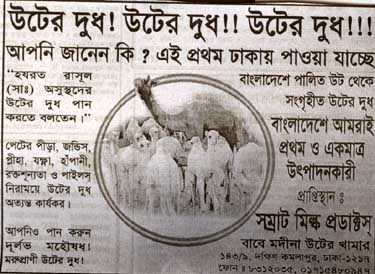
Here is another one that was advertised in the paper yesterday - locally produced camel milk! (or is it !!!)

Here is another one that was advertised in the paper yesterday - locally produced camel milk! (or is it !!!)
Wednesday, June 07, 2006
Personal Space
Because of a sudden downpour at the usual time - 7am - I was late going for my morning run today. When I reached the park at 8:10, I found it empty. Instead of sharing this park with dozens of others - mostly walkers - I had the whole place to myself.
I found myself wondering why this was so. Had the numerous people who walked here every morning, as early as 6am, been scared off by the rain? Were they all busily getting ready for another day at the battlefields of work? Did they decide to forego the Park authority's stern advice, spelled out in bold letters at vantage points throughout the park: the crisp "Health is Wealth", the common-sensical "Of all exercises, Walking is best" and the logic-defying "All the wealth you accumulate has to be shared with others, but your health is for your own enjoyment only."
But here is the weird part. Instead of being pleased that I had this small but open place to myself, I was actually missing those people! I realized that I was learning to become a Bangladeshi again, and that my notion of personal space - once so important to me when I was in the US - was slowly eroding.
Whether or not you agree with Sartre that existence precedes essence, you have to agree that an important essence of being Bangladeshi is making do with tiny amounts of space: an inevitable side-effect of 130 million people sharing a land smaller than Wisconsin. From the moment a person is born, to their deathbed, they must cope and thrive while surrounded by people.
You can call it "making do" with small space - or you can say that they are violating my personal space. It really does not matter. The point is that Bangladeshis deal with this issue heroically every day. But this same heroics can drive foreigners to distraction. Some days I marvel at the heroics, other days I want to pull my hair out.
I marvel at the way a romantic couple makes the long walk up to one of the large flyovers in the city, because there are no pedestrians on top, and they think they are alone on top of the world. I marvel at gaggles of schoolchildren, or the streams of garment workers who flutter out like so many butterflies from their institutions. I marvel at the way shopkeepers at the Bazaar who manage to keep track of the orders of all the customers who are never in line and always crowding them. I marvel at the way that drivers, rickshaw pullers and bicyclists all share the road, sometimes getting in each others' way, always navigating through whatever tiny space they can find, but never losing their cool. And I marvel at the traffic policemen who, despite all the crazy traffic, keep on directing traffic to reduce jams and get people to where they are going. (Well, most of the time. Sometimes the traffic cops seem asleep or just stand there without doing anything.)
I pull my hair out when the Bangladeshi passenger contingent on a flight to Middle East, upon hearing the announcement, rushes to the gate as one monolithic mass, almost trampling each other and small children in their hurry to board the plane. Is the plane going to take off without them? Once inside the plane, when I am standing on the aisle placing the bags on the overhead, why must they push and shove past me instead of giving me 5 seconds to sit down and get out of their way? When I am at a crowded place, such as a Bazaar, I pull my hair out when I am pushed, shoved, stepped upon and sometimes even poked by umbrellas. But no one else seems to mind this kind of behavior - whether on sending or receiving end - it seems they grew up with it and know no better.
Encroachment on personal space goes beyond the physical. What about the intense stares one receives on the road or public space, specially if one is foreign or female (or both?) And at the workspace, instead of delegating work and letting employees complete it in their own intellectual space, we Bangladeshis love to butt in and micromanage. When someone falls sick, every well-wisher has a recommendation for this medicine and that doctor.
So there you have it. For better or worse, to be a Bangladeshi means learning to make do with very little personal space. And it looks like I am getting used to it, even as I enjoy a morning run.
Another Dream Project
I was brainstorming with some brilliant ex-BUET engineers in Dallas and this idea came to us:
1. Pick 10 enterprising and resourceful kids from final year CSE (the self-starter types rather than good-in-the-exam types). This is the critical step. They must be willing and able to read reams of code and figure out how a software is working.
2. Give each a cubicle and a Internet-connected computer.
3. Point them to sourceforge and other open source repositories.
4. Tell them they have 12 months, during which they will get paid, to build whatever they want using open source code. Of course they must show up every day and work on their project.
Who knows, something interesting may come out of this. Cost? Maybe 25-35 lac?
Submarine Cable
Apparently 23 ISPs are now connected to the submarine cable. My ISP, Grameen Cybernet, claims to be connected. However, I am seeing virtually no difference in my browser and download performance. I measured 27kbps download and 55 kbps upload speeds today. According to my service level I should be getting (pre-submarine) 32 down and 16 up (which, to be fair, I almost never got in reality, so things have gotten ever so slightly better.)
Grameen Cybernet also told me about issues related to how BTTB is allocating bandwidth to ISPs.
Be still my beating heart.
:-(
Grameen Cybernet also told me about issues related to how BTTB is allocating bandwidth to ISPs.
Be still my beating heart.
:-(
Sunday, June 04, 2006
Bangladesh: The Sleeping Beauty
Nice article in The Independent of UK:
http://travel.independent.co.uk/asia/article355274.ece
"... We reflected on why so little had been done to preserve the country's heritage."
Yes indeed.
http://travel.independent.co.uk/asia/article355274.ece
"... We reflected on why so little had been done to preserve the country's heritage."
Yes indeed.
Thursday, June 01, 2006
The Sweet Month
It is the middle of the Bengali month JoisTha, also known as the "modhu" month. "Modhu" means honey in Bengali.
So why is JoisTha the sweet month? Because our favorite fruits have ripened.
Sweet, fragrant lychees are in full swing. Of the many varieties floating around, I have tried three. The "deshi" ones have slightly fatter seeds and thinner layer of flesh around it. The "bombay" ones have thinner seeds but just as juicy - the preferred way to get these is to "book" a tree in Rajshahi and then share it amongst a group. Someone from work had done this and so I got a few hundred. The third variety I tried was much bigger than the other two with larger grains on them. This one was also delicious.
Another fruit that I did not taste in many years has also ripened - Jaam. These black ovals have an intense sweet-tangy taste and are extremely refreshing. The best way to eat them is to smash them up with some salt which softens the tang. Black outside and purple inside, Jaams tasted just as good as they had years ago.
KaThaals - Jackfruits - have also started arriving in the markets. Two main kinds - the soft, chewy kernels and the crunchy kernels (Khaja KaThaal) - have their own fanatical followings.
And the king of them all, mangoes - the early varieties from Rajshahi are available, including Gopalbhog, but the sublime Lengra is not here yet. Maybe in a couple of weeks...
(I do miss the California summer fruits, specially the incredibly sweet white nectarines and babcock peaches bought from farmer's markets - the grocery store ones were no good.)
Monday, May 29, 2006
Talk Show Mirror
Just a quick note that the TV talk show "Mirror" on Channel i, hosted by my better half Sonia, will air today at 6:20PM BST (London 1:20pm, NY 8:20am, Dallas 7:20am, San Francisco 5:20am). There will be a re-broadcast later in the week - I will post the time as soon as I find out.
The show features various ambassadors in Bangladesh and their experiences here. This week's guest is the French Ambassador.
The show features various ambassadors in Bangladesh and their experiences here. This week's guest is the French Ambassador.
Pretty Cambridge (UK)
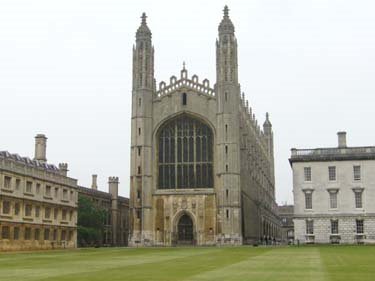
During my recent trip to the UK, I was in Camdridge for two days. Jetlagged, I was up at 4:30 am and found myself wandering near the river Cam. Some pictures from those days:
Cam River is narrow but pretty.


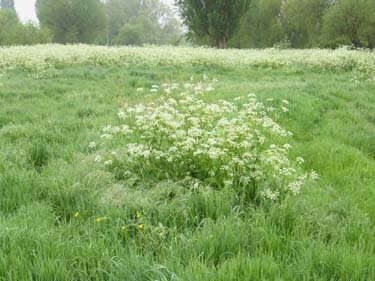
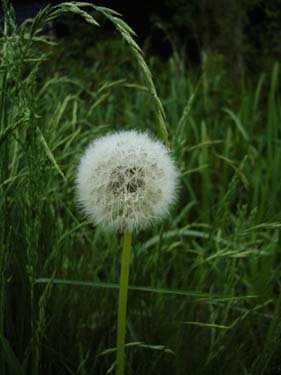
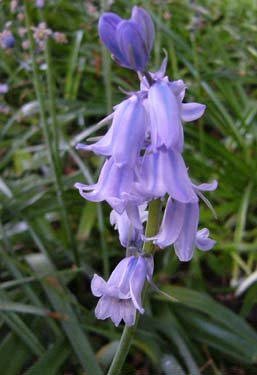
Meadows nearby were full of flowers


Kings College


Bridge over Cam

Cam River is narrow but pretty.


Meadows nearby were full of flowers
Kings College
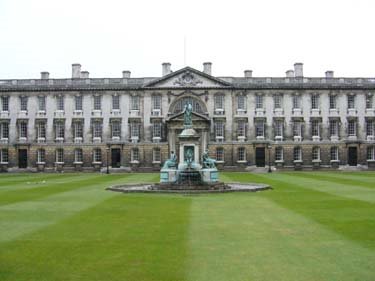
Bridge over Cam

Sunday, May 28, 2006
Interesting People in London
During my visit to London, I "ran into" some interesting people.
I was walking by a bookstore on the way to a meeting, when I saw a sign saying Pele, the legendary footballer, would be book-signing at 6PM Thursday. It took me a couple of moments to realize it was Thursday and very close to 6. I am no closet Paparazzi, but I was not about to pass up on a Pele sighting.
Here is the picture I got (you can see I failed the Paparazzi test :-)). But it was great to see this legend:

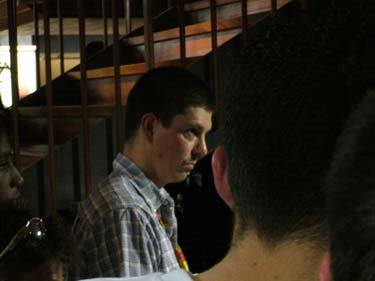
Weirder, here was a guy in the crowd who looked exactly like Scott McNealy!

Another time our delegation was invited to a dinner. The guest speaker was the Queen's son, Andrew, the Duke of York (Fergie's ex):

This was the place setting for the dinner. Over the top, but hey it is royalty!

In his speech, Andrew went to bat for the British IT industry, urging the invited foreign businessmen to do business with UK companies. Perhaps more Bangladeshi leaders can do the same for the IT industry here?
I was walking by a bookstore on the way to a meeting, when I saw a sign saying Pele, the legendary footballer, would be book-signing at 6PM Thursday. It took me a couple of moments to realize it was Thursday and very close to 6. I am no closet Paparazzi, but I was not about to pass up on a Pele sighting.
Here is the picture I got (you can see I failed the Paparazzi test :-)). But it was great to see this legend:

Weirder, here was a guy in the crowd who looked exactly like Scott McNealy!
Another time our delegation was invited to a dinner. The guest speaker was the Queen's son, Andrew, the Duke of York (Fergie's ex):

This was the place setting for the dinner. Over the top, but hey it is royalty!

In his speech, Andrew went to bat for the British IT industry, urging the invited foreign businessmen to do business with UK companies. Perhaps more Bangladeshi leaders can do the same for the IT industry here?
Bangladeshis in London
I lived in London from 1975 to 1977. Those were dark days for Bangladeshis (indeed, all immigrants) in London. Racism was rampant and economically the Bangladeshis inhabited the bottom of the food chain.
Two weeks ago I visited London as part of a business delegation. I had some meetings in Brick Lane and got to re-visit some of the "slums" I remembered from earlier days. Boy have things changed!
Bangladeshis (specially 2nd and 3rd generation) are now an upwardly-mobile group in the UK. Brick Lane thrives with rushing young people running their own businesses.
Not only do Bangladeshis own over 20000 restaurants in the UK, they sometimes co-opt other cuisine and give it a Bangladeshi taste. Eg, "Perfect Fried Chicken", a Bangladeshi-owned chain, takes the traditional Doner Kabab (Gyros) and fries it with chilis and Bengali spices to turn out a Bangladeshi Doner Kabab. I thought a good Doner Kabab could not be improved but these guys proved me wrong.
Bangladeshis hold many high-profile positions in the UK. For example, Irene Khan, the chief of Amnesty International, is from Bangladesh. So is the new mayor of Tower Hamlet Borough. The Qureshi family is probably a record-breaker in having three elected officials, called "Councillors", in London. And of course, Anwar Choudhury, the British High Commissioner in Dhaka.
In the (rather fat) book "Probashir Katha", Nurul Islam chronicles how the Bangladeshis - most of them from Sylhet - arrived in the UK. For example, Bangladeshi sailors fought alongside the British in the First world war and are mentioned in War Memorials in London. During the 1970s, several Bangladeshis were killed in racist violence.
But the persistence of this community - particularly in educating their younger generations - has paid off. I congratulate them on their success.
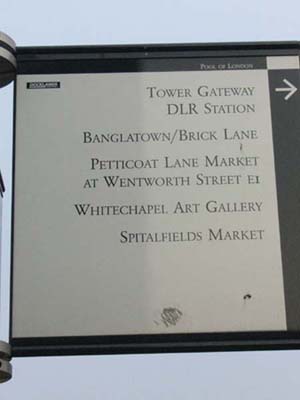
A signpost on Tower Bridge pointing to Banglatown:

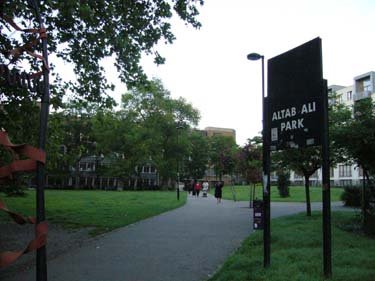
A park in memory of Altab Ali, killed by racists in 1978:

Two weeks ago I visited London as part of a business delegation. I had some meetings in Brick Lane and got to re-visit some of the "slums" I remembered from earlier days. Boy have things changed!
Bangladeshis (specially 2nd and 3rd generation) are now an upwardly-mobile group in the UK. Brick Lane thrives with rushing young people running their own businesses.
Not only do Bangladeshis own over 20000 restaurants in the UK, they sometimes co-opt other cuisine and give it a Bangladeshi taste. Eg, "Perfect Fried Chicken", a Bangladeshi-owned chain, takes the traditional Doner Kabab (Gyros) and fries it with chilis and Bengali spices to turn out a Bangladeshi Doner Kabab. I thought a good Doner Kabab could not be improved but these guys proved me wrong.
Bangladeshis hold many high-profile positions in the UK. For example, Irene Khan, the chief of Amnesty International, is from Bangladesh. So is the new mayor of Tower Hamlet Borough. The Qureshi family is probably a record-breaker in having three elected officials, called "Councillors", in London. And of course, Anwar Choudhury, the British High Commissioner in Dhaka.
In the (rather fat) book "Probashir Katha", Nurul Islam chronicles how the Bangladeshis - most of them from Sylhet - arrived in the UK. For example, Bangladeshi sailors fought alongside the British in the First world war and are mentioned in War Memorials in London. During the 1970s, several Bangladeshis were killed in racist violence.
But the persistence of this community - particularly in educating their younger generations - has paid off. I congratulate them on their success.
A signpost on Tower Bridge pointing to Banglatown:
A park in memory of Altab Ali, killed by racists in 1978:
Friday, May 26, 2006
Center of Excellence for IT in Bangladesh
I have been thinking about this idea for a while, and wanted to write down my thoughts.
Why?
----
One way that Bangladesh can attain higher success in IT is to achieve excellence in smaller sub-areas of IT. Currently the IT industry in Bangladesh is trying to do too many things with too few skilled people. If we want to achieve success on a broad front of IT, we need tens of thousands of quality IT graduates every year. This is not realistic.
Therefore, we need to pick our battles carefully. Our kids are very intelligent. If we can focus them more in one or two areas, we can establish Bangladesh as a dominant player in certain subareas of IT.
For example, certain Eastern European countries are well-known as developers of Software Tools such as compilers, debuggers etc. The Philippines has established a reputation in animation. Many ATM-banking software packages come from Russian companies. Certain parts of Canada are well known for digital video expertise. And so on.
Once we establish technical excellence in an area, this will lead to more people being trained in this area and one hopes the critical mass needed for take-off will be created.
What Will it do?
----------------
In each Center of Excellence, a number of students (15? 20?)will work with academic and industry people and build software of industrial quality. They will learn to work as teams, use the tools and technologies needed, and under the guidance of a project lead, execute a project. Once the software is done it will be distributed as open-source software.
Why Will it Work?
-----------------
The emergence of open source software is one of the biggest reasons why CoE will work. This kind of software gives a head-start to anyone wanting to build a software project in many areas.
Another reason why it will work is that many bright young students are eager to sink their teeth into knotty, cutting-edge problems. Many CS/CSE students graduate without having built any real-world software because they were so busy learning the fundamentals. They are very eager to learn how to build "real" software.
Finally it will work because it will improve the employment prospects of the students.
Who Will Fund it?
-----------------
Such a Center will need to be heavily subsidized, with the understanding that perhaps, after 3 or more years, some revenue-generating work may be created. However, that should not be the goal of the CoE.
We cannot expect the students to pay high tuitions, although some fees must be charged so that students feel compelled to attend to get their money's worth.
What are the Subareas?
----------------------
Obviously the subareas must improve the employment prospects of the students. At the same time, they must be technically challenging. And they must be growth areas, globally.
Some possible areas are: Web 2.0 technologies, animation, database tuning, GIS, etc.
Is a CoE the Same as a "S/W Finishing School?"
--------------------------------------------
Not really. The difference is in the focus. While both want to make software engineers out of CS/CSE graduates, a CoE also wants to build up a critical mass of skills in a certain technological area so we can compete with the rest of the world in that area.
Who Will Run it?
----------------
A CoE must be run jointly by one or more universities and the IT industry. The former will contribute ideas, students, and skilled resources. The latter will contribute engineering discipline, solving tough engineering problems, and mentoring. Management can be done jointly.
Barriers to Venture Capital
Venture Capital is a powerful and effective way for doing big and interesting things in cutting-edge technologies. VC enables entrepreneurs to pursue their dreams by providing funds for their projects in exchange for a share of the business they are creating. VC have enabled many success stories in Silicon Valley (eg, Sun, Google, Cisco) as well as in other parts of the world.
A VC investment is not a loan. If you are an investor, risks in funding a VC project are very high. If the venture fails - happens 90% of the time - you lose your investment. But gains are also high, with 100x returns not uncommo in a successful venture.
The other day I was talking to someone from the British govt who has worked in Bd for several years on promoting different types of businesses. When I found out that he had an investment banking background, I asked him what were the barriers to creating a Venture Capital friendly environment here.
He mentioned two top items: no "exit strategy", and the lack of minority rights.
"Exit strategy" is how a VC investor realizes their gains in a successful venture. In the West, when a VC-funded company turns into a successful business, it is either floated (IPO) in the share market (in which case the investor makes a ton of money from selling their share of the company), or it is sold to a bigger company (in which case usually the investor's share also becomes a lot of money.) In Bangladesh, this person pointed out, neither is a viable option. The stock market is not vibrant, and there is no practice of buying out companies.
Minority rights was unfamiliar to me. So he explained it. VC investors are usually minority shareholders in a company (ie, they own < 50%). In the West, with this much ownership, they still have lots of rights and power within the company. However, in Bd, in a company boardroom, the majority shareholder has much greater power over the rights of the minority shareholder.
I plan to dig in more. I have heard lots of businessmen in Bd are sitting on tons of money, and we need to enable them to profitably put this equity back into the economy. A VC culture would be a boon to our IT business and help create an economy based on higher value goods and services.
Wednesday, May 10, 2006
Driving in Dhaka
During my first few weeks in Dhaka, I was constantly stressed by the driving. I mostly relied on a driver, but was worried he was going to hit someone or something. Amazingly, nowadays I am relaxed in the car.
Some unwritten rules I have gathered (remember, you drive on the left here):
If you are at an intersection and want to turn right, it is best to be on the leftmost lane and swerve all the way to the right at the last possible moment. This helps keep everyone awake and provides free brake-check for parties on the right.
Rickshawallahs will not brake unless faced with a situation where the cost of not braking is significantly higher than the cost of braking. One such situation is a policeman with a big stick. Impending collision with a speeding car does not constitute a reason for a rickshawallah to brake. After all, it is easy for the car driver to brake and resume, but it is much harder for the rickshawallah to do that.
If you are a CNG driver, then the amount of arrogance you show while saying "No" to a prospective passenger's trip request should be directly proportional to how exhausted/sweaty/pitiful the passenger looks.
If you are a bus driver, nothing will dare get in your way. Do as you please.
Honking is an act of courtesy. You should honk whenever there is the remotest chance that the person (or vehicle) in front of you is unaware of you. Sometimes you should honk to make sure your horn is working. You should do this preferably between 2am and 4am.
If you are near a pedestrian overpass, you should be really watchful for pedestrians. Whenever they see an overpass, Bangladeshis have the curious need to cross the road. Since it is easier to dash in front of speeding cars and jump over traffic islands than it is to climb the overpass, most people will opt to get in the way of your car. The govt should have built overpasses for the cars at major pedestrian intersections in order to save the pedestrians so much inconvenience.
110V Electronics
Some NRBs asked me how our 110v electronics from the US have fared in Bangladesh.
I was fortunate to find Mr. Latif of Hardy Electronics. He converted all my stereo equipment from 110v to 220v. He also built a transformer for my laser printer, and later fixed it when it was accidentally connected directly to 220V. He is amazingly competent.
Computers are not a problem because they run on 110-240.
Smaller devices (boomboxes, telephones, faxes, scanners, etc) run with step-up transformers I got in the US. You can buy them here for much less. Rule of thumb is to use a transformer with 2x the wattage of the device. So, for example, if you have a boombox that consumes 50W, you should use a 100W transformer.
Our lamps from the US were converted to local receptacles and wiring. That seems to work.
The only things that I have not figured out yet are the high wattage 110V kitchen equipment (coffeemaker etc). If anyone has an idea let me know. (And when I get that coffemaker working, I will start searching for freshly-roasted French Roast. Never a dull moment :-) )
Tuesday, May 09, 2006
Friday, May 05, 2006
The Padma/Jagadish Chandra Bose
Early Friday morning, a friend and I went to Mawa Ghat on the river Padma, a 50-minute drive from Dhaka, to explore and take pictures.
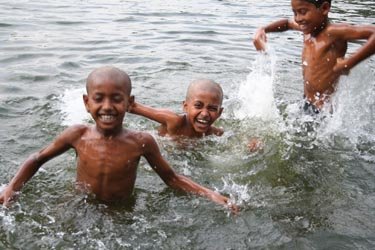
The Padma was wide even at this dry season. We found a fish-market on the sandy bank. Fish was brought in by numerous boats, and sold here for the markets in Dhaka. Children were playing everywhere. Mawa village lay next to the market, with narrow lanes and tin-roof houses.
From Mawa we drove to the ancestral home of (late) Sir Jagadish Chandra Bose - one of Indian subcontinent's most eminent scientists - in Dohar. Sir Bose invented wireless radio (local lore claims he divulged his findings to Marconi who walked off with the credits). He was also a great botanist, the first to prove conclusively that plants have lives.
Sir Bose's home is over many acres of land, and includes several buildings, ponds, orchards, etc. It has been converted into various schools and living quarters for school employees. Though there were statues and pictures of him, we found no documentation or introduction to his work. Sad.
From there we visited the old mansion of a (Hindu) Zaminder with directions from a local acquaintance. We found the palace to be in poor repair. Some remnants pointed to the glory of old days, including ancient broken water pumps that ran on diesel and pumped water up to a rooftop tank so the Zamindar family could take showers. I am not sure who owns the property now. In fact, I could not even find the name of the original Zaminder.
Then it was off to nearby Bhagyakul market where my companions tasted the famous local "maaTha" - a lemony, sweetened yogurt drink. I abstained for bacteriophobic reasons, but relented in the end. A sip of the drink was delicious, not as thick as Lassi, but made invigorating by fresh lemon juice.
We returned home by noon. Thanks to Dr. Zia for showing me these places. Now the pictures.
The Famous Hilsa Fish of the Padma

Boats on the Padma

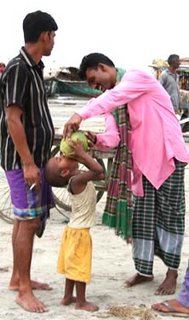
Dad feeding coconut-water to kid
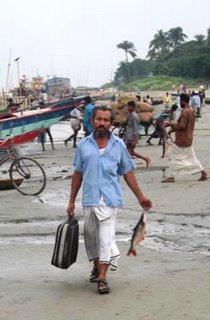
Man with suitcase and fish
Boy who works on a boat

Windows in Mawa village

Girl with doll on riverbank
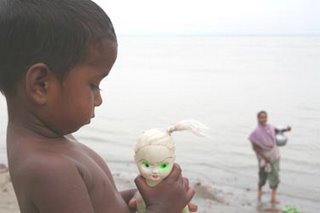
Cute kid at Mawa village

Entrance to JC Bose's home

Compound of one building in JC Bose's home

Drying clothes on roof of JC Bose's home

Roof-antennas in the house where the man who invented wireless radio once lived:
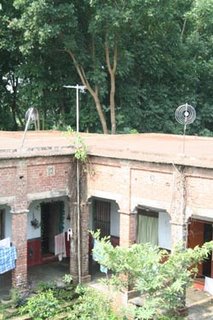
Jarul flowers in another building in JC Bose home:

A hijol tree on the pond; hijol's decomposed bark is good fish food:

Old Zamindar mansion
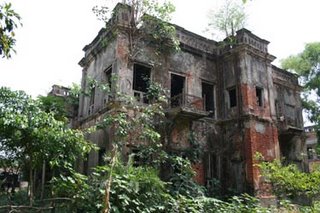
Pond belonging to Zamindar home

Kids climbed this tree for its flower

The Padma was wide even at this dry season. We found a fish-market on the sandy bank. Fish was brought in by numerous boats, and sold here for the markets in Dhaka. Children were playing everywhere. Mawa village lay next to the market, with narrow lanes and tin-roof houses.
From Mawa we drove to the ancestral home of (late) Sir Jagadish Chandra Bose - one of Indian subcontinent's most eminent scientists - in Dohar. Sir Bose invented wireless radio (local lore claims he divulged his findings to Marconi who walked off with the credits). He was also a great botanist, the first to prove conclusively that plants have lives.
Sir Bose's home is over many acres of land, and includes several buildings, ponds, orchards, etc. It has been converted into various schools and living quarters for school employees. Though there were statues and pictures of him, we found no documentation or introduction to his work. Sad.
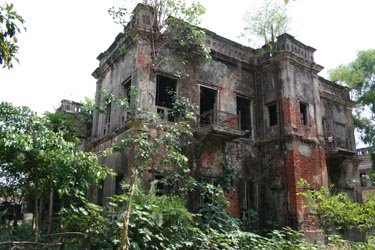
From there we visited the old mansion of a (Hindu) Zaminder with directions from a local acquaintance. We found the palace to be in poor repair. Some remnants pointed to the glory of old days, including ancient broken water pumps that ran on diesel and pumped water up to a rooftop tank so the Zamindar family could take showers. I am not sure who owns the property now. In fact, I could not even find the name of the original Zaminder.
Then it was off to nearby Bhagyakul market where my companions tasted the famous local "maaTha" - a lemony, sweetened yogurt drink. I abstained for bacteriophobic reasons, but relented in the end. A sip of the drink was delicious, not as thick as Lassi, but made invigorating by fresh lemon juice.
We returned home by noon. Thanks to Dr. Zia for showing me these places. Now the pictures.
The Famous Hilsa Fish of the Padma

Boats on the Padma
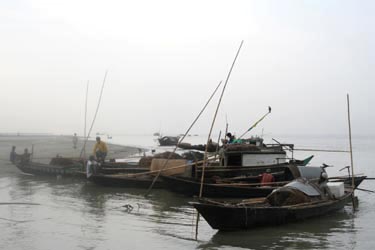
Dad feeding coconut-water to kid

Man with suitcase and fish

Boy who works on a boat

Windows in Mawa village

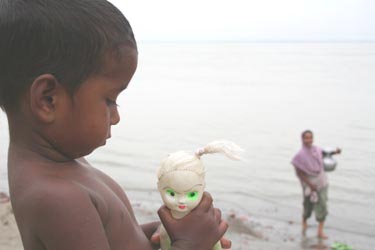
Girl with doll on riverbank
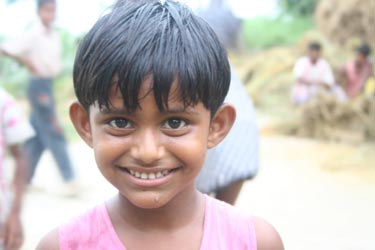
Cute kid at Mawa village
Entrance to JC Bose's home

Compound of one building in JC Bose's home

Drying clothes on roof of JC Bose's home
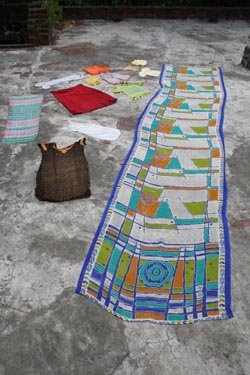
Roof-antennas in the house where the man who invented wireless radio once lived:

Jarul flowers in another building in JC Bose home:
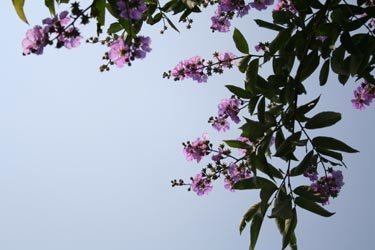
A hijol tree on the pond; hijol's decomposed bark is good fish food:

Old Zamindar mansion
Pond belonging to Zamindar home
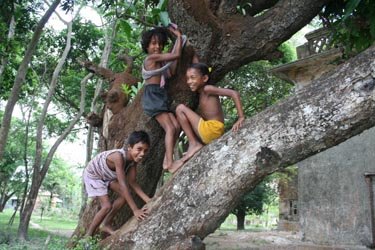
Kids climbed this tree for its flower
Stories from DS Business Awards
I attended this Award ceremony tonight. A great service from the Daily Star, to recognize business leaders and inspire budding entrepreneurs.
Couple of stories I found inspiring:
Business Person of the Year was Mr. Fazlur Rahman, Chairman of City Group of Industries, which employs 10000 people in 18 industries. I heard a story about him. When he was 9 years old, Mr. Rahman, who comes from a poor family in old Dhaka, went to the local grocery store to buy a few ounces of cooking oil on credit (I guess the family was short on cash). When he was turned down, he came home and swore to his Mother, "One day I will make an oil factory." And sure enough, his first factory was an Oil Mill (today they make Teer Cooking Oil as well as a zillion other things.) What an inspiration!
The last 5 years in the US, with increasing outdoor activities such as camping, hiking, biking, etc I grew fond of outdoors wear. The North Face is my favorite brand among technical outdoor clothing, because of their high quality (strong, lightweight, quick-drying, insulating, etc.) And guess what, much of their high-performance clothing is made in Bangladesh. The factory is Youngone, a Korean-Bangladeshi company, which won an award tonight.
The reason I found Youngone so inspiring is because this is cutting-edge stuff they make, not me-too products. Their philosophy of specializing in one thing and becoming really good at it has really paid off. They have proved that Bangladesh can create products w-a-a-a-y up the value chain.
I believe such an approach will work for the local IT industry.
Wednesday, May 03, 2006
My Letter in Time Magazine
Time magazine (Asia edition) on May 8, 2006 published my letter (in its entirety) regarding the Bangladesh article.
I can't find a link, so I will just quote the email I sent them.
Dear Sir,
Natives of Bangladesh, me and my wife worked in Silicon Valley for over 20 years in both engineering and managerial roles before deciding to return here in 2005. A key factor that helped us decide was the growth of the economy. Time-Asia's April 3rd cover story validates our thinking.
However, your story placed too little emphasis on the entrepreneurs and the development visionaries and too much emphasis on the politicians.
Too often, the progress of Bangladesh has been because of the efforts of the former and *despite* the efforts and petty bickerings of the latter.
Ihtisham Kabir
Subscribe to:
Posts (Atom)